Random writings on a city born farmer, travel and life.
First blog post
This is the post excerpt.

This is the post excerpt.
Random writings on a city born farmer, travel and life.
Pam and I have just finished setting up one bay in the garage as a baby chicken nursery. This happens every year when we get chicks in the late fall or early winter. Rug remnants, cardboard, a tarp, then newspaper insulate them from the concrete floor. Portable kennel fences go up. We laid a large rubber livestock trough on its side to make a kind of coop for them to sleep in. Heat lamps are clamped on its upper edge and anchored to the fence to keep them angled downward. Waterers and feeders are placed here and there. Orange safety fencing is then run over the top and sides to keep them from escaping.
We drive to the only farm store still selling 1 – 3 week old chicks in late October. We take three boxes with us in the pick-up. We’re getting 35 to replenish our laying flock. Max, our farm caretaker, comes with. He’s planning on 20 chicks of his own. He picks out 6 five-week old brown leghorns. The rest will all be 1 -3 week old balls off downy fluff in yellow, brown, black or white. They are scooped up by the handful and placed into our boxes. After we pay, we load them up into the truck.
They scrabble around trying to keep their balance as we drive down the highway and then onto our dirt road. Periodically an eruption of complaints arises as one chick, then another moves to be in a better spot. A bump or washboard in the road gets them going again. The chicks make all sorts of squeaking and peeping sounds. We arrive home and head to the garage. We place chicks by handfuls of two or three into their new home. We have to introduce them to their water and feeding dishes, no easy feat.
For most of us not born and raised with chickens in our yards, catching a panicked chick is a comic event. We try for the leghorns first. They are the biggest and should be the easiest to catch. Two of us go into the enclosure. All of them scatter, run, squeak and chitter. They find places to hide that we can’t quite reach. Turning and grabbing them is tricky. They are underfoot. They swarm in small flocks within the flock. Little wings try to fly; the leghorns having more success at this. We need to make sure we don’t get the same chick twice. It takes what seems like forever before we introduce at least 10 of them to their food and water source.
The next few months we hear the sound of chicks every time we go into the garage. They skitter about on the newspaper whenever a door opens. They chirp and chitter and cheep and squeak. One very small chick manages to get out. It takes 5 minutes to corral her back in. Then the hole is patched.
The garage doors open to the east. On sunny days we open the bay door. After they are sure the rumble has stopped, they rush into the sunshines. They get real sunlight instead of the artificial neon day of the garage. The late autumn sun is low and hot. The rest of the day we see them nestled up against the fence enjoying the warmth. In the evening, before it gets chill, we close the door again.
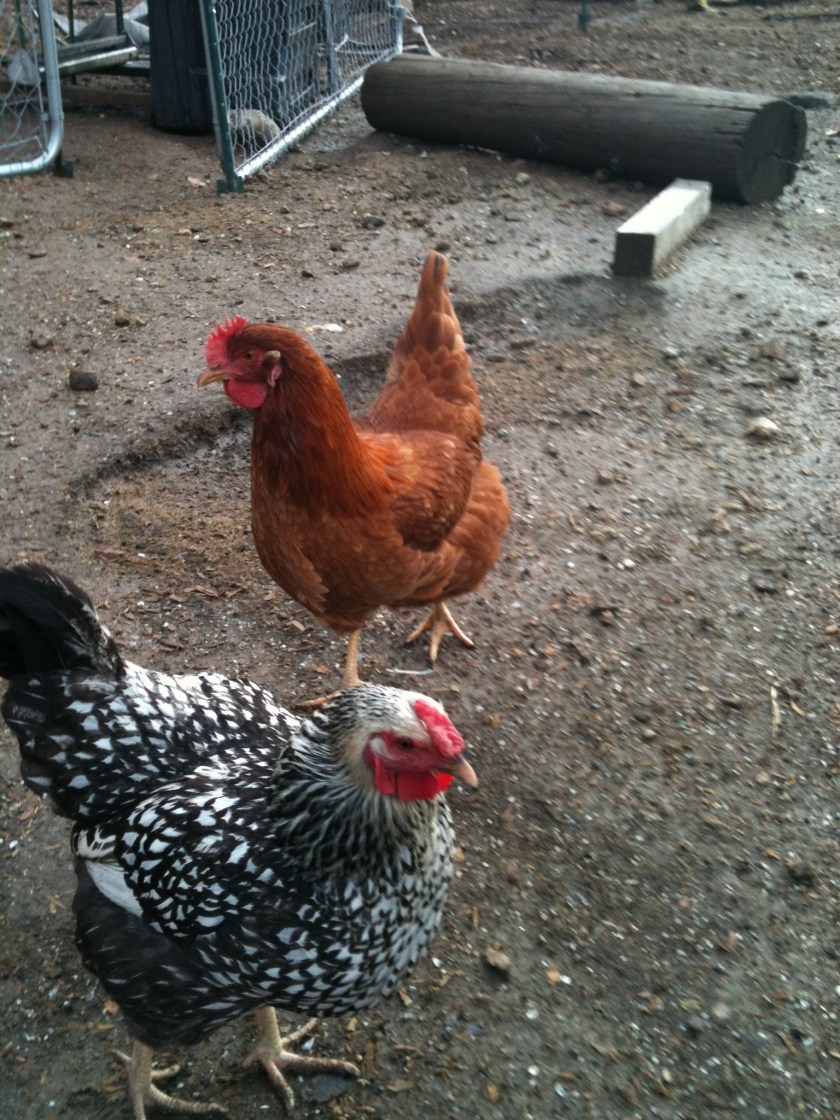 After three months it is time to move them up to their new chicken coop and yard. Normally we move chickens at night. They all wake up the next morning thinking everyone was always there. However, a flock of young chicks can be moved together during the day. We put them in boxes again and take them the short distance to their new home. Immediately they scatter, looking for hiding places under nesting boxes or behind feed bins and water containers. Panic gradually subsides to quiet investigation. They find their food and water.
We go back down to the garage to clean it out. Everything has a place to go to, either storage or recycle or trash. When the bay has the last evidence of the chick nursery swept out, the door is left open. I drive my car into the space I gave up for most of the winter. As I step out of the car, I notice the quiet. Outside, the songs of wild birds can be heard. Inside, I miss the chicks.
 3 CHICKS AND A GOAT